Scenes From Portland Life: On Willy Vlautin’s “The Left and the Lucky”

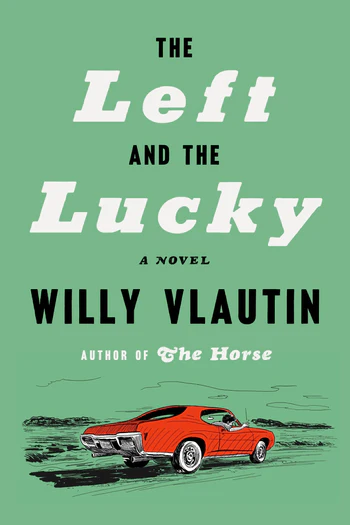
The Left and the Lucky

Anytime I crack open a fresh Willy Vlautin novel, I brace myself to flip through a rolodex of misfortune. Most reviews of his work dutifully hit the same set of keywords to describe his worlds: downtrodden, fringe, bleak, down-and-out, hardscrabble, underbelly, endlessly sad—and my favorite, because it’s as spare and straightforward as Vlautin’s own prose: depressing. Vlautin himself once admitted in an interview with Oregon Artswatch, “That’s always been kind of a weakness of mine, making stuff too bleak.”

Continue Reading

Forget the Guidebook: A Review of Meghan Lamb’s “Mirror Translation”

Mirror Translation

Weird shit can happen when you’re far from home. To be clear, similar phenomena can also be experienced in your own backyard; still, there’s a long tradition of vacationers and expatriates making bad decisions while overseas. At their best, these stories can memorably evoke different forms of alienation; at their worst, they can play into alarming or nativist tropes.

Continue Reading

No Self and Other but Only Oneness: A Review of Marc Vincenz’s “No More Animal Poems”

No More Animal Poems

A report from Washington: Trump, president of the United States, who refers to climate change as a hoax, a scam, has announced that “endangerment finding,” scientific proof issued by the Environmental Protection Agency (EPA) in 2009, is finally being erased by him. This finding shows beyond doubt that greenhouse gases and climate change threaten our health and environment, not to mention the negative impact on other animals (of which we are one of the 8.7 million species on the planet, give or take), animals whose  migration patterns, access to food sources, and habitat loss can lead to species extinction. We are living in a futuristic dystopian present.

Continue Reading

A Bracing Short Story Collection: On Alfred Corn’s “Hosts”

Hosts

Alfred Corn, the esteemed poet and man of letters, brings his considerable gifts to Hosts, a radiant collection of short stories. Across ten pieces, his unmistakable poetic sensibility and the immeasurable storehouse of his vocabulary create a word‑lover’s paradise. These contemporary tales—of love, loss, memory, and disappointment—carry an ageless resonance, making them feel both timely and enduring. It is the kind of collection discerning readers have been waiting for.

Continue Reading

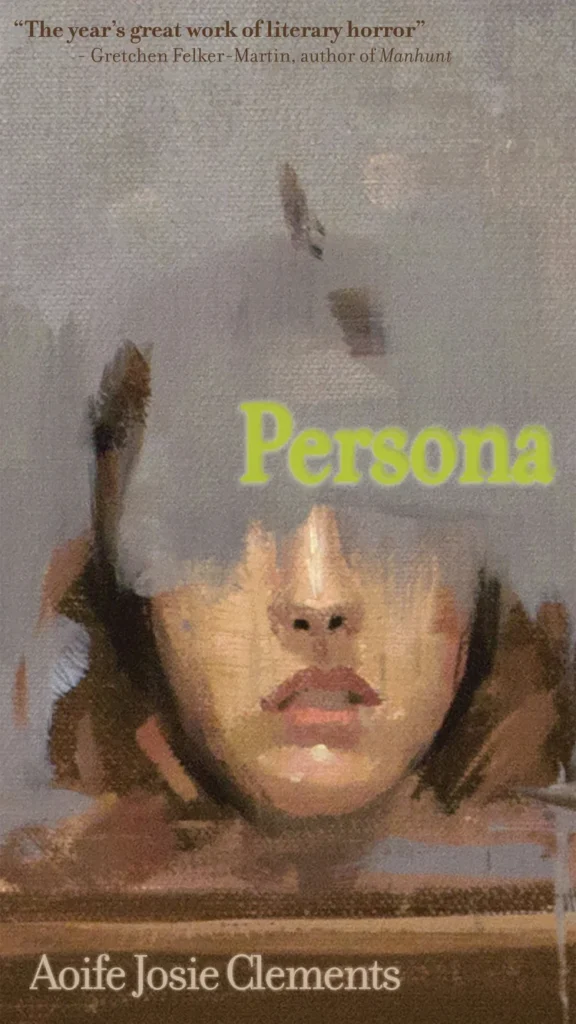
A Very Particular Nightmare: On Aoife Josie Clements’s “Persona”

Persona

The more horror I read, the more I’m convinced of an inalienable truth: for a horror story to work, it has to reflect something that terrifies the author. That might be something as simple as an evil clown holding a machete, or it could be something abstract and idiosyncratic. Aoife Josie Clements’s Persona is firmly in the latter category, I suspect, but it isn’t entirely clear just how far its author is willing to go until its conclusion.

Continue Reading

Fraught Connections: A Review of Mike Powell’s “New Paltz, New Paltz”

New Paltz, New Paltz

Early in Mike Powell’s slender debut novel, New Paltz, New Paltz, the protagonist establishes his affinity for escalators. “That feeling of moving without moving,” he remarks, “Like how an angel might move.” This divine eclipse with the material world is one of several instances in which the novel briefly punctures its own reality–one that traverses bingo nights and dog parks, a Fourth of July party. It is more than just the mystical and the mundane butting heads, however. As you read it, New Paltz, New Paltz, begins to feel more like a procedure in trying to ascertain what even can be considered ‘mundane’ or ‘mystical’ to begin with, and how we might discriminate between the two. The effect is dizzying while striving for clarity, like being taken through a washing machine cycle with some acid for detergent. 

Continue Reading

The Uncanny Histories of Vernon Lee

Hauntings

A little context can go a long way, especially when it’s from knowledgeable guides. My first encounter with Vernon Lee’s uncanny fiction came when I read the collection The Virgin of the Seven Daggers. I will confess that I don’t remember much else about it, the fact that I was reading it in 2020 goes a long way towards explaining that. I enjoyed Lee’s work enough that I was excited to see a new version of her 1890 collection Hauntings published with a conversation on the book (and Lee’s work) by Gretchen Felker-Martin and Kayla Kumari Upadhyaya.

Continue Reading